I have come to trust that I will often be alone and loveless, though I know the sentence does not describe a fact so much as the shape my thinking has given to uncertainty. It is not a conclusion I reached after measuring the world carefully. No one has shown me a future in which every door closes, no authority has certified that I am incapable of being chosen, and no law of nature has assigned me to permanent solitude. Still, the belief has acquired the texture of knowledge. It has lived with me long enough to become familiar, and familiarity has begun to impersonate truth. I know how it feels when it enters the room. It does not announce itself dramatically. It settles beside me with the quiet confidence of someone who has already read the final page. It tells me that I should stop expecting the arrival of another person, not because love is impossible in the world, but because I am too slow to meet it when it appears. I have begun to understand my loneliness not as an absence but as a permanent condition of being, a climate in which I will have to learn to live. The danger of this belief is that it makes the future seem mercifully simple. If I am destined to be alone, then every disappointment becomes confirmation, every silence becomes evidence, and every person who leaves is spared the responsibility of being the one who proved me wrong. I do not have to risk hope if I can turn it into a childish misunderstanding of the world. I do not have to ask anyone to stay if I can convince myself that no one ever would. I do not have to explain what I need if I can name my failure to explain as the reason I was never meant to be understood.
The part of me that believes this is not without evidence, although the evidence is always arranged after the verdict. I remember the occasions on which I did not speak, and I treat them as if they were the moments in which my entire future was decided. I remember the people beside me, the ordinary tenderness of their presence, and I remember my own failure to make that tenderness visible. I was there, but I was not entirely available. I was listening, but I was often listening from behind a wall. I knew what I felt, or I knew that I felt something, but between the feeling and the words there was a distance I could not cross quickly enough. Other people seemed to move through emotional life with an immediacy I could not imitate. They said they were happy, hurt, lonely, grateful, afraid, or in love while the feeling was still happening. Their thoughts appeared to travel directly from the body to the mouth. Mine traveled through rooms of inspection. Before I said anything, I had to examine the feeling from every angle, test its legitimacy, predict how it might be received, imagine what it might require from me afterward, and decide whether I could bear the consequences of making it real in another person’s mind. By the time I had completed this private investigation, the moment had altered. The other person had moved to another subject, or the day had changed, or the warmth between us had become ordinary enough that naming it seemed strange. I would remain with the sentence I had prepared, holding it in my mind like an object I had carried a long way only to discover that the place where it belonged no longer existed.
I have often wondered whether my difficulty is that I feel too little or that I feel too much. The first explanation is easier to live with because it makes my silence simple. If I do not feel enough, then there is nothing to communicate and no one to blame. But the truth is closer to the opposite. I notice more than I can organize. I notice the change in a person’s voice when they are trying to sound casual about something that matters to them. I notice when someone laughs because they are delighted and when they laugh because they want to prevent a conversation from becoming serious. I notice the fatigue beneath their patience and the loneliness beneath their independence. I notice the way someone’s hands move when they are comfortable, how they become less guarded, how they begin to occupy space without apologizing for it. I notice these things and then become more silent, not less, because awareness does not automatically become language. It can become an additional burden. I begin to feel responsible for every possible interpretation. If I tell someone I missed them, will they hear affection or need? If I say I am hurt, will they hear accusation? If I say I am happy, will they wonder what I expect them to do with that happiness? If I say I love them, will the word become a demand that neither of us agreed to carry? I have treated every honest statement as a doorway to a room filled with obligations, and so I have remained outside, insisting that I am only waiting for the right time to enter. The right time, however, is often just another name for the moment before fear became more persuasive than truth.
I remember doing yoga with someone I cared about, and when I return to that memory I do not remember the sequence of poses as much as the sensation of being near a body whose presence altered my awareness of my own. The room was quiet in the way rooms become quiet when several people are concentrating on what cannot be seen. There may have been music, though I cannot summon it now. I remember the floor beneath my hands, the slight resistance of the mat, the effort of holding a position while pretending that effort was ease. We were asked to pay attention to our breathing, to release the tension around our eyes, to notice where the body had begun to protect itself without being instructed to do so. I remember thinking that I had spent years carrying my face as if it were a shield. I remember glancing toward the person beside me and seeing them move through the same instructions, turning inward with a kind of concentration I found beautiful. I wanted to tell her that I liked being there with her, that her presence had made the room feel less like a class and more like a shared interior place. I wanted to say that I felt lucky, but the word seemed inadequate and too exposed. “Lucky” suggested a casual accident, while what I felt was closer to having been admitted somewhere I had not expected to enter. I wanted to tell her that I liked the way she inhabited her body, that I liked the quietness of her attention, that I was aware of her even when my eyes were closed. None of this was a demand. None of it needed to change the relationship. It was simply true, and I wanted the truth to be known by the person who had helped create it.
Instead, I counted my breaths. I followed the instructions. I let the thought remain inside me because I had decided that saying it would disturb the atmosphere, though perhaps it was only my own fear I was trying not to disturb. At the end of the class, we lay on our backs with our eyes closed. The room felt larger then, as if the bodies had become less distinct and the air had taken on the responsibility of holding us. I listened for the other person’s breathing and found it among the other sounds. In, out. In, out. The rhythm was unremarkable, but I experienced it as evidence. They were there. I was there. We were sharing a period of time in which neither of us had to perform conversation, and yet I wanted to turn my head and say, “I am happy you are here.” The sentence was so simple that its simplicity embarrassed me. I imagined it rising into the room and becoming too large. I imagined the person opening their eyes, looking at me with concern, asking whether I meant more than I had said. I imagined myself unable to explain that I did not know whether I meant more, only that the feeling of their presence had become important to me. So I said nothing. We rolled up our mats, put on our shoes, and walked into the day. The street was still there. Cars moved past. Someone laughed near the entrance. The ordinary world had not changed to mark the fact that something important had been left unspoken. I carried the sentence away with me, and because I did not release it, it became heavier. A thought that begins as affection can become regret if it remains enclosed long enough.
I remember cooking with someone in much the same way, though the kitchen gave me more instructions than the yoga room had. Cooking allowed me to hide inside usefulness. There were vegetables to cut, a pan to heat, ingredients to measure, dishes to locate. The work created a sequence, and the sequence gave me something to do with the parts of myself that did not know how to participate in intimacy. I could ask whether the oil was hot enough. I could ask whether the vegetables needed more time. I could taste the sauce and suggest more salt. These questions were safe because they had answers that did not reveal anything about the condition of my heart. The person beside me moved through the kitchen with an ease I admired. They knew when to trust their senses instead of the recipe. They knew how to make a meal from what was available. I watched them reach for things, open drawers, rinse a knife, and make room for me without making a ceremony of it. I thought that there was something beautiful about the way they transformed ordinary materials into a shared evening. I wanted to tell them that I liked seeing them make a life out of small actions. I wanted to tell them that being invited into that process made me feel included in a future I had trained myself not to imagine. I wanted to tell them that when they handed me the spoon, I felt as though they were offering me more than an object. They were saying, without saying it, that there was room for my participation.
When our hands touched as we reached for the same utensil, I felt the contact throughout my body. It was not dramatic. It was barely a touch, but my attention gathered around it as if it had been called by name. I could have said, “That made me happy.” I could have laughed and allowed the pleasure to remain visible. Instead, I pulled my hand away and pretended to search for something on the counter. I made the moment smaller before the other person could decide what it meant. At the time, I told myself I was being careful. I did not want to burden the moment with interpretation. I did not want to make a simple touch into an announcement. Yet I now suspect that I was not protecting the moment from my interpretation. I was protecting myself from the possibility that the other person might receive my happiness and not return it. I was afraid that if I showed them how much their presence affected me, they would understand the exact location of my vulnerability. I believed that being known was a form of exposure from which I might not recover. I did not consider that remaining unknown might also be a kind of loss. The food was prepared. We sat down. We ate. Perhaps the evening was perfectly fine. Perhaps the other person went home believing we had shared something ordinary. I went home carrying the untouched sentence, which grew heavier because I had allowed it to remain invisible.
The walks are harder to remember because walking leaves fewer objects behind. There is no room to return to in the same condition, no cutting board, no mat, no arrangement of ingredients that can restore the atmosphere. There is only the path and the movement of two bodies along it. We walked through streets where the trees were beginning to grow their leaves, and I remember the air carrying the smell of damp soil, traffic, and something sweet from a bakery we passed without entering. The person beside me pointed out things I might not have seen alone: a cat looking from a window, a piece of chalk pressed into the pavement, the tremor of a traffic light reflected in a puddle. I loved the way she looked at the world. I loved that she could bring attention to something without needing to possess it. The walk did not require either of us to be impressive. We could move slowly. We could talk about insignificant things. We could allow silence to exist without immediately turning it into a problem. I wanted to say that I could walk like this with her for years, though I knew the sentence reached too far into a future neither of us had promised. I wanted to say that I did not need the walk to arrive anywhere. I wanted to say that I liked being beside them even when I had nothing important to contribute.
Instead, I asked whether she had been sleeping well. The question was not false. I cared about the answer. But it was also a retreat into the manageable. I could ask about sleep without revealing that I was imagining a future measured by the length of our walks. I could listen to their answer without explaining that their presence made the city feel less indifferent. I often told myself that I was waiting until I understood the feeling better, but this was another way of saying that I wanted to know what the feeling would cost before I admitted to having it. I wanted to speak only after I had guaranteed the outcome. I wanted honesty to function as a form of control, to make it possible for me to express myself without becoming vulnerable to the other person’s freedom. But the other person was always free to misunderstand me, to decline me, to grow tired of waiting, or to decide that the distance between us was too wide. My silence did not remove those possibilities. It only prevented me from knowing which one was true. I did not become safe. I became unknowable, including to myself.
There was also a playground, and I return to it because it contained a version of us that seemed temporarily released from adulthood. There were swings and climbing structures, slides and chains warmed by the sun. The ground had the soft, artificial texture designed to absorb falls. We climbed as if the equipment were larger than it was, as if the slide led somewhere beyond the park, as if the swings could carry us far enough away from the demands that had followed us into every other place. I remember the other person laughing, and I remember feeling the sound enter me before I had decided what it meant. The laughter made me happy, but it also made me afraid because I wanted to keep it. I wanted to preserve the exact quality of that moment, the lightness of their body, the way they looked at the world when they were not trying to protect themselves from it. I wanted to say, “You make me feel young in a way that is not childish.” I wanted to say, “I do not usually feel this light.” The words seemed too solemn for the playground, so I chased them instead. I ran, laughed, pretended not to be tired, and allowed the physical activity to speak for me. When asked whether I wanted to go down the slide, I said yes before I had decided whether I did. At the top, we sat for a moment and looked over the park. Trees, benches, a path leading away, people moving at a distance. The world appeared temporary and complete. I wanted to say that I would remember it. I wanted to say that this small, ridiculous place had become sacred because they were in it with me. Instead, I went down the slide, and the feeling remained behind at the top.
I have spent years interpreting these moments as proof that I am incapable of love, but they may show something more complicated. I was not without feeling. I was unable to make feeling available in the time required by ordinary closeness. My mind treated communication as something that should happen only after the emotion had been fully understood, refined, and made safe for another person. I believed that spontaneity was evidence of sincerity, so my hesitation became evidence against me. If I needed time to say that I was hurt, I decided that the hurt was not legitimate. If I wrote down what I wanted to say, I decided I was manufacturing emotion. If I rehearsed an expression of affection, I decided it could not be authentic because it had not arrived effortlessly. I had confused immediacy with truth. I did not understand that preparation can also be a form of care, that a person may need time not because they are manipulating a conversation but because they want to speak without causing unnecessary harm. I did not know that I could say, “I do not have the words yet, but I want to stay in this conversation,” and that the sentence itself would be a form of communication. I assumed I had to arrive with the finished explanation, so I disappeared whenever I was still in the process of understanding myself.
The delay became a private geography. A feeling would begin in one place, and the words would exist somewhere much farther away. I could see them, but I could not reach them without crossing a landscape filled with questions. What exactly am I feeling? Is it proportionate? Does it belong to this moment or to an older wound? What will the other person assume? Will they feel obligated to respond? What if I say I need something and they decide I am too needy? What if I say I am grateful and they hear a confession? What if I say I love them and the word changes the relationship by exposing its true dimensions? I spent days moving through these questions, hoping that the correct sentence would eventually emerge, complete and unambiguous. But language is not a sealed container that can be perfected before it is offered. It is a living exchange. It becomes clearer through contact with another person. I could have given them the unfinished thought. I could have said, “There is something I am trying to tell you, and I am afraid of saying it badly.” I could have let them witness the process rather than only the silence that preceded it. Instead, I insisted that I needed to know exactly what I meant before I spoke, and by the time I knew, the other person had often stopped waiting.
This is the part I regret most, not simply that I failed to say beautiful things, but that I made other people experience my uncertainty without giving them any explanation for it. They may have interpreted my quietness as indifference. They may have believed that I was distracted, dissatisfied, or emotionally absent. They may have offered me opportunities to come closer and watched me respond with practicality. They may have felt alone while standing beside me. I think of the person in the yoga room, breathing next to me without knowing that I was grateful. I think of the person in the kitchen, moving around me while I hid inside questions about timing and salt. I think of the person walking beside me, listening to me discuss sleep when what I wanted to say was that their presence had become part of how I experienced the world. I think of the person on the playground, laughing while I tried to outrun the tenderness that laughter awakened in me. I am sorry for making them interpret the blank spaces. I am sorry for demanding, without saying so, that they understand a language I had not taught them. I am sorry that I treated my fear as private and harmless when it entered the relationship as distance.
Still, I also know that regret can become another form of self-absorption if I use it only to punish myself. It is possible to spend years apologizing to the past because the past cannot answer back. The people I failed to reach may have their own memories of those moments, and their memories may not resemble mine. Perhaps they did not wait for the sentence as long as I imagine. Perhaps they accepted my silence and moved on. Perhaps they understood more than I allowed myself to believe. Perhaps I am not as central to their recollections as they remain to mine. I cannot turn regret into a method of traveling backward. I cannot enter the kitchen and place the missing words on the counter. I cannot return to the top of the slide and hold the moment open. I cannot tell the person beside me in the yoga room that my quietness was full of gratitude. The past does not need another performance from me. It needs to be seen accurately. I was afraid. I was slow. I was not empty. My inability to speak did not cancel my capacity to love, but it did prevent that love from becoming legible. It is possible for both things to be true, and I have resisted that complexity because a single verdict is easier to carry than a divided one.
When I say that I will often be alone and loveless, I am often attempting to replace uncertainty with a sentence I can survive. The future, left open, demands participation. It requires me to consider that I may meet someone and have to tell them what is happening inside me. It requires me to admit that I might be loved and still fail to receive the love clearly. It requires me to recognize that another person cannot be expected to rescue me from a silence I defend as privacy. The absolute sentence relieves me of those demands. It allows me to imagine that my loneliness has already been decided, which means I can stop noticing the choices that sustain it. I do not have to ask whether I could communicate differently today. I do not have to say that I need time without vanishing. I do not have to admit that I want someone to stay. I can remain in the role of the person who was never meant to be reached. That role is painful, but it is coherent. It gives my life a story in which no one can accuse me of abandoning an opportunity because opportunities were never really mine. I have made solitude feel like a diagnosis because a diagnosis seems more authoritative than fear.
There are moments when I believe I would rather be unloved than misunderstood. Yet being misunderstood has often been the consequence of refusing to be understood in the first place. I have wanted other people to recognize the distinction between my withdrawal and my indifference, between my hesitation and my lack of care, between my silence and my absence. I have wanted them to know that I was full of feeling even when I looked unreachable. But another person cannot love me entirely through inference. They cannot be expected to distinguish every form of quietness by instinct. At some point, I have to enter the room I have asked them to imagine. I have to say, “I am quiet because I am overwhelmed, not because I do not care.” I have to say, “I need time to find the words, but I am not leaving.” I have to say, “I am afraid that if I tell you how much you matter, you will see how much power you have to hurt me.” These sentences are not elegant. They do not resolve the problem. They do something smaller and more important. They make the distance visible. They give the other person a place to stand while I cross it.
I do not know whether I will learn to do this well. I do not know whether the people I have loved would have stayed if I had spoken sooner. I do not know whether my honesty would have changed anything, or whether it would merely have made the ending clearer. I have wanted language to guarantee love, but language cannot do that. It cannot bind another person to me. It cannot prevent them from changing, leaving, misunderstanding, or discovering that what they need is different from what I can offer. The purpose of speaking cannot be to secure the outcome. It has to be to stop making the other person guess. A feeling does not become less real because it cannot control what follows. If I say, “I am happy you are here,” the other person may not know what to say. If I say, “I want you to stay,” they may not be able to stay. If I say, “I love you,” the word may arrive in a relationship that cannot hold it. But if I never say any of these things, I preserve the appearance of safety by ensuring that the other person never encounters the truth of me.
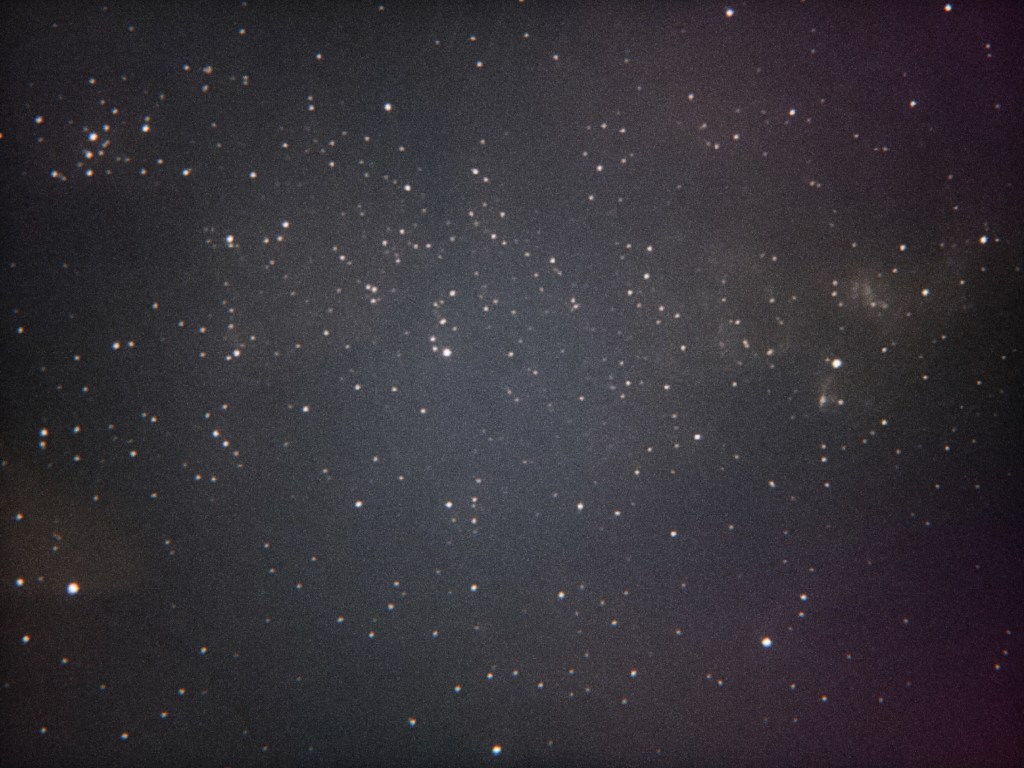
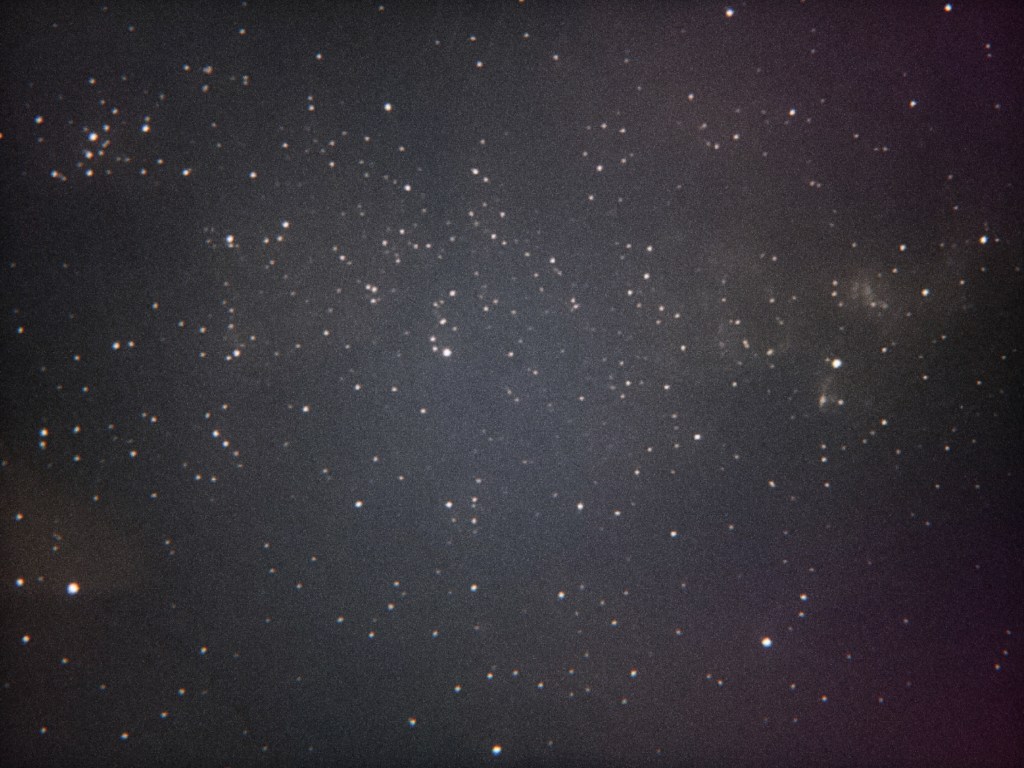
I think of the stars because they make delay visible. Light can travel for years, centuries, or longer before reaching the place where it is seen. Some of the stars visible to us may have changed or vanished by the time their light arrives, but the light continues outward, carrying evidence of a source that is no longer present in the same way. I find this both beautiful and cruel. The sky can show us something that has already ended and ask us to experience it as present. It can make the past shine so brightly that we mistake the brightness for survival. I recognize myself in that distance. I have been sending signals long after the moment that required them had passed. I have been allowing my words to travel through years of hesitation, reaching people only after they had moved beyond the place where those words might have mattered. By the time I said what I felt, I was sometimes speaking to an earlier version of the relationship, one that no longer existed except in my memory. My honesty arrived as light from a source that had already gone dark.
I have thought of this as evidence that I am too late for love, but perhaps lateness is not the same as absence. It does not restore what has ended, and I do not want to romanticize delayed communication as though regret were a substitute for presence. Some words need to be spoken while the person is still standing beside us. Some apologies cannot repair the wound they name. Some love, if it remains unspoken long enough, becomes a private monument rather than a shared experience. I know this. I know that my inwardness has consequences. I know that the beauty of an unexpressed feeling does not excuse the loneliness it creates. But I also know that the light is real even when it is late. The fact that it cannot return the star does not mean it carries no truth. It tells us that something burned. It tells us that somewhere, once, there was enough force to cross the dark.
I want to become less interested in preserving feelings than in allowing them to enter the world. I want to stop waiting until I can speak perfectly and begin with what is available. I want to say, “I do not know how to explain this yet, but I am affected by you.” I want to say, “I am afraid that my silence is making you feel unwanted.” I want to say, “I am trying to stay present while I find the words.” I want to tell someone that I am happy they are there before the class ends, before the food cools, before the walk turns toward home, before the playground empties. I want to let the sentence be ordinary enough to survive. I want to understand that love does not always require a declaration capable of carrying the entire weight of the future. Sometimes it asks only for an accurate account of the present. Sometimes it asks me to say, while the other person is still beside me, “This matters to me.”
I do not want the ending of this thought to become an easy promise. I cannot say with certainty that I will not always be alone. I cannot promise that learning to speak will bring anyone back or guarantee that anyone will stay. I cannot turn my regret into a reason to expect forgiveness. The future remains unknown, and I am still frightened of it. What I can say is that “always” has been doing too much work in my mind. It has been disguising fear as prophecy. It has been allowing me to treat my habits as fate. I have mistaken the length of my silence for the measure of my lovelessness. I have assumed that because I often arrive late to my own feelings, no one will wait for them. Perhaps no one will. Perhaps some people have already stopped. But that is not the same as saying that no one ever could, and it is not the same as saying that I am incapable of becoming someone who speaks before the light has traveled beyond reach.
The memories remain, and I do not want to flatten them into lessons. The yoga room was real. The kitchen was real. The walk was real. The playground was real. The feelings I failed to express were real, even though they were incomplete in their passage between us. I was not a star without light. I was a star too far away, too slow to be seen in the time another person needed to know I was burning. I existed at a distance and mistook that distance for a lack of existence. I hid behind the fact that light takes time, as though the delay absolved me from sending it. I watched people move away and told myself that the darkness between us had always been inevitable. I did not want to admit that I had sometimes been close enough to speak.
Now, when I imagine the space between stars, I do not imagine emptiness. I imagine distance filled with messages that may or may not arrive. I imagine light leaving a body that cannot follow it, moving outward without knowing who will receive it. I imagine the terrible vulnerability of shining toward something that is still years away. Perhaps this is what love has always asked of me, not certainty, not permanence, and not a promise that I will never again be alone, but the willingness to send a signal before I know whether another light is waiting. I have been afraid to shine because the next star seemed impossibly far away. I have waited for proof of its nearness before allowing myself to become visible. I have called the darkness evidence that there was no one there.
But there may be another star, and I may never know unless I let the light leave me.
So I am apologizing now, not only to the people I failed to reach, but to the distance itself. I am apologizing for the years I spent treating my silence as an identity, for the moments in which I loved someone privately and left them to experience me as absent, for the words I held until they became relics, for the tenderness I preserved so carefully that it could never touch another person. I am apologizing for believing that being slow meant being empty, for believing that being afraid meant being doomed, for believing that loneliness became destiny simply because I had learned how to describe it. I am apologizing for being a star years away from the next star, for burning in a place no one could reach quickly, for sending light too late and then calling the delay proof that I had never been seen.